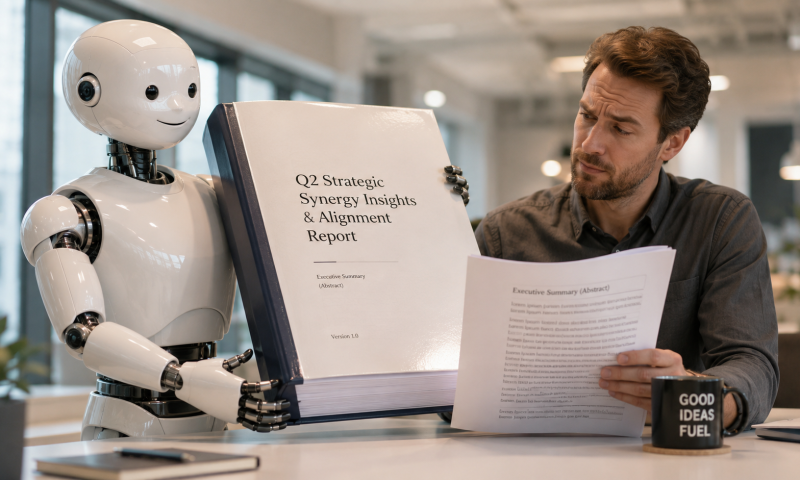

Someone on my team came to a meeting with a beautiful summary. Bullet points, clear synthesis, the kind of prep that used to take two hours and now takes twenty minutes, and then someone asked a follow-up question. Not a hard one, just a “why do you think that?” and she froze. Not because she didn’t know, but because she hadn’t needed to know: the AI had done the knowing.
I’ve been watching this for about a year now and I want to be careful how I name it, because it would be very easy to be smug. These are good people doing intelligent things with the tools available to them. But something is happening that we need to look at plainly.
The productivity numbers in our team went up when we adopted AI tools. Then they went up again. Then they plateaued, and then, for some people, they started to slide. It wasn’t because the tools stopped working. It was because the people using the tools had started to hollow out. The muscles for thinking through a problem, building an argument from scratch and sitting with the discomfort of not yet knowing, were getting less use. As we all know, muscles you don’t use go soft.
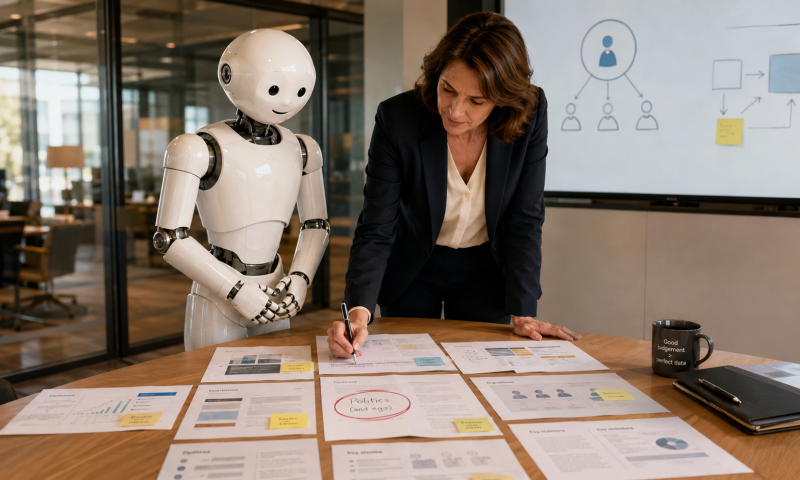
Here in South Africa, this has a particular texture. We have a 33% unemployment rate and we have staff who know, consciously or not, that they need to be irreplaceable to stay gainfully employed. And yet the shortcut that AI offers, being the polished output, the instant answer, the meeting prep that looks thorough, is exactly the shortcut that makes people more replaceable. So what does make you irreplaceable? That would be your judgement, your relationships and your read of the room, none of which can be prompted.
So what do I actually do about it? Not as policy… I find policy-think about ‘human skills’ a bit exhausting, honestly… but as a person managing people I care about?
I ask more questions in meetings.
Not to test people, but because the follow-up question is where thinking actually lives. If someone can’t get past their AI-generated prep when pushed, that tells me something. Not that they’re bad at their job, but that they need practice thinking out loud again.
I’m also explicit about it with my team. Use the tools, I tell them. Use them well, use them constantly. And then tell me what you think – not what the summary says… what you think. The distinction between processing information and forming a view is the whole game right now, and it’s a distinction worth keeping in mind regularly until it becomes the norm.
The chiefs of staff I talk to across the world are wrestling with versions of this. The symptoms vary but the underlying thing is the same: when AI handles the production work, the question becomes what are you adding? A lot of people haven’t had to answer that question clearly before. It turns out it’s a hard question and the answer matters enormously.
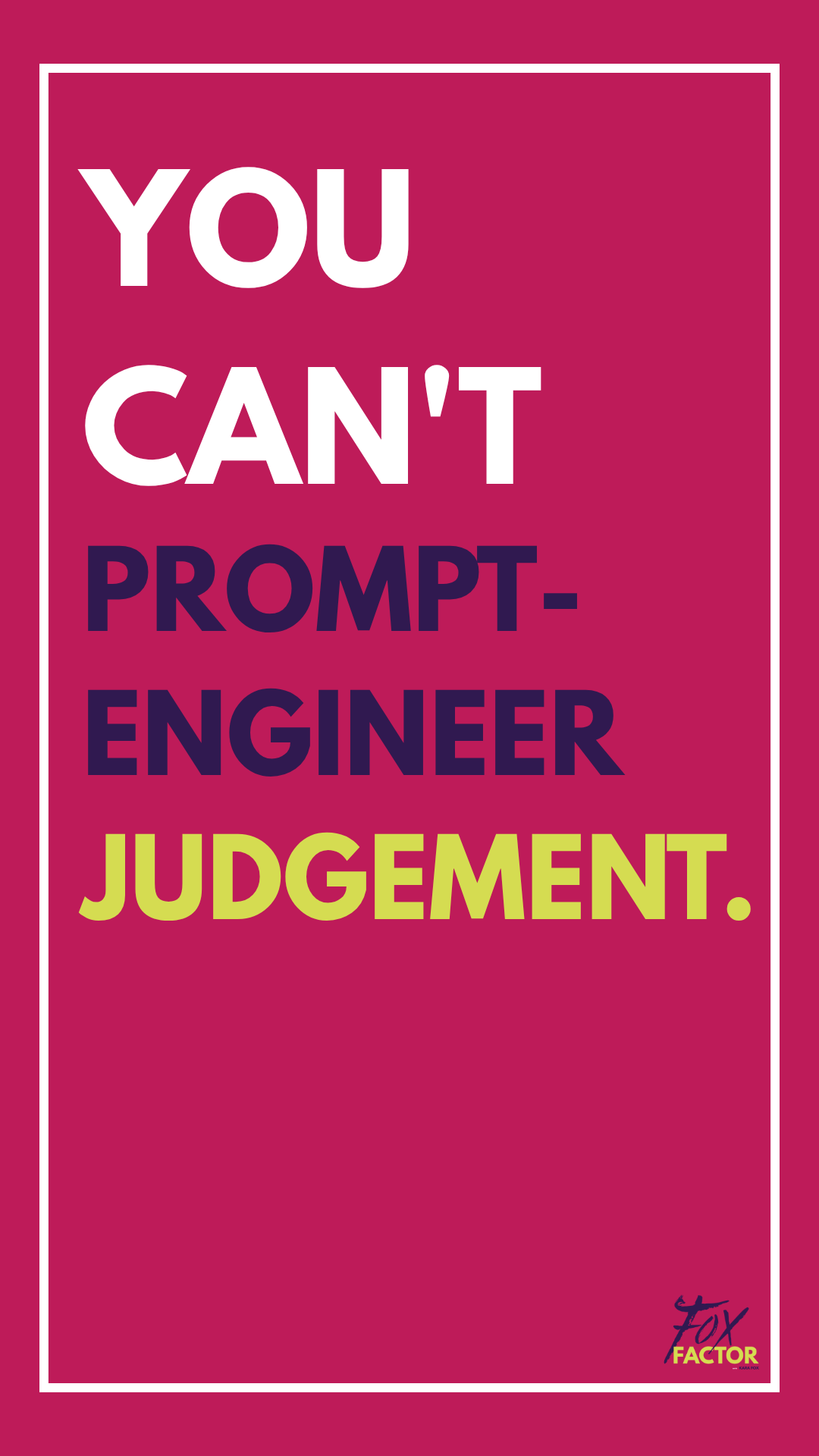
Judgement is the answer. Judgement in the sense of: this particular organisation, these particular people, this particular moment… what does the situation actually need? You cannot prompt-engineer your way into that. You can only develop it by doing it repeatedly, in public, with the real possibility of being wrong.
That’s what I’m trying to protect in my team: not human skills in the abstract. But rather, their capacity to think, fail, correct, and become someone whose judgement you’d trust with something that truly matters.